So you want to start a blog. Cute. You probably typed “how to start a blog in 2025” into Google, landed on a tutorial written by some guy who hasn’t updated his theme since Obama was president, and now you’re knee-deep in a 4,000-word guide that is somehow 30% affiliate links. Every second paragraph is, “Just sign up with Bluehost using my link below and I’ll make 75 bucks off your hope and desperation.” Yeah — spoiler alert — most of these “ultimate blogging guides” aren’t there to help you. They’re there to squeeze a commission check out of your dreams.
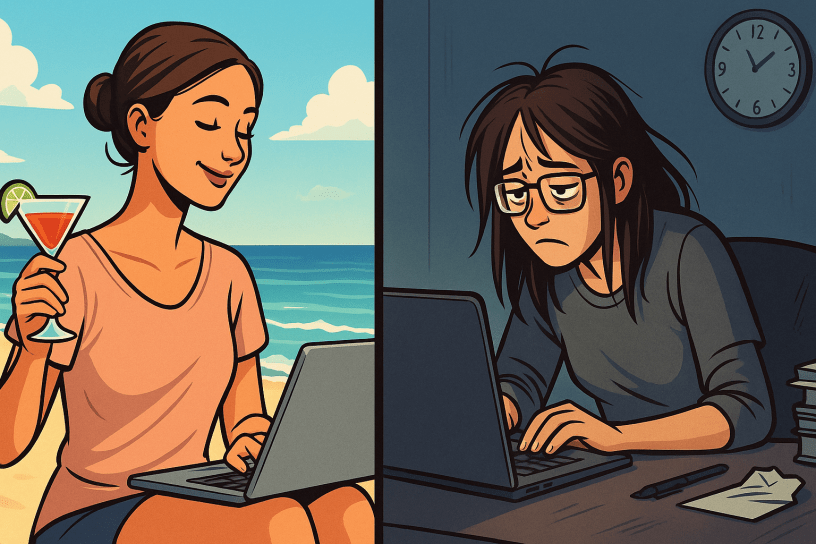
But here’s the thing: blogging isn’t dead, it’s just wearing a hoodie and avoiding eye contact like a socially anxious teenager. If you do it right, it can still change your life. But before you dive in thinking you’ll be the next millionaire lifestyle guru sipping margaritas on a Bali beach while your passive income machine prints money — let’s talk about the seven things nobody tells you when you start a blog.
1. Writing Is the Easy Part (Consistency Is the Monster)
Oh, you love writing? Adorable. Guess what — hitting “publish” once a month and praying to the Google algorithm gods won’t cut it. The real challenge is showing up when nobody cares, when nobody’s reading, and when your blog traffic is basically your mom and a Russian bot. Consistency beats talent. If you can force yourself to show up week after week, even when your stats page looks like a flatline on an ER monitor, that’s when you separate the quitters from the actual bloggers.
The truth is, writing when you’re inspired is fun. Writing when you’re tired, unmotivated, and doubting your entire existence? That’s where the game is won. Consistency isn’t about perfection — it’s about building trust. Your readers (when you finally get some) want to know you’ll keep showing up, not vanish for six months and then return like, “Hey guys, sorry for the break, life’s been crazy.” Nobody cares. Keep writing.
Think of consistency like going to the gym. The guy who shows up three times a week for a year will always beat the dude who crushes one insane January workout and then ghosts until next winter. In blogging, steady effort compounds. Even your “meh” posts add up into authority over time. Consistency is boring, but boring is what gets results.
2. Traffic Takes Forever (And Then Some)
All those “make $10,000 a month in your first 3 months” guides? Yeah, that’s about as real as a Photoshop influencer’s jawline. Real talk: it can take six months to a year before Google even acknowledges you exist. Social media traffic? Sure, if you want to dance on TikTok for 3 strangers and a bot named Karen_1987. Growth is slow, painful, and at times humiliating — but when it clicks, it really clicks.
Here’s the ugly math: unless you’re already an influencer, nobody is refreshing your blog on launch day. You’re basically yelling into an empty stadium for months. And that’s the part most people can’t handle. They want applause right away. But if you survive the awkward silence phase, you’ll discover traffic is less about luck and more about stacking bricks. Each post builds your foundation.
And when traffic finally comes? It doesn’t trickle in evenly. It’s more like nothing, nothing, nothing — and then suddenly a random post hits page one of Google and your analytics graph shoots up like it just chugged five energy drinks. The patience it takes to reach that moment is brutal, but when it happens, it feels like the universe finally noticed you exist.
3. Your First Blog Posts Will Suck (And That’s Fine)
Your first 20 posts? Garbage. No, seriously. They’ll read like diary entries written by a caffeinated squirrel. But that’s not a reason to stop — it’s proof you’re improving. Blogging is basically leaving your early failures up on the internet forever and still finding the courage to hit publish again. Think of your blog as a time capsule of your growth. One day, you’ll look back at Post #3 titled “My Thoughts on Productivity Hacks” and laugh until you choke on your coffee.
Everybody starts bad. Hemingway wasn’t Hemingway on Day One; he was just some dude scribbling questionable drafts. The difference between a blogger who succeeds and one who doesn’t is whether they survive long enough to outgrow their cringe era. Your writing voice sharpens through practice. The only way to get better is to keep hitting publish, even if your early work makes you want to crawl under the bed and hide.
And guess what — nobody is reading your first posts anyway. That’s actually a blessing. Use the invisibility stage to make mistakes, experiment with styles, and figure out what the hell your blog is even about. By the time you do have an audience, you’ll have leveled up so much that your old posts won’t define you. They’ll just be relics of how far you’ve come.
4. SEO Isn’t Optional (It’s Survival)
Nobody tells you this early enough: SEO isn’t just a buzzword. It’s the difference between your blog being found or your blog being buried. Keywords, backlinks, alt text, site speed — the nerdy stuff matters. You don’t need to become a full-time SEO wizard, but ignoring it is like opening a store in the desert and wondering why nobody walks in. Learn enough SEO to be dangerous. Then actually use it.
Think of SEO as learning the language Google speaks. If your content is written beautifully but in a language nobody understands, it’s invisible. SEO translates your work so search engines can put it in front of real humans. It’s not sexy, it’s not glamorous, but it’s the plumbing of your blog. Nobody brags about plumbing, but when it’s broken, you notice fast.
And here’s the kicker: SEO compounds like investing. The little tweaks you make today — optimizing a headline, adding internal links, fixing load times — can pay off months or even years later. That’s why seasoned bloggers obsess over it. It’s the closest thing blogging has to planting seeds in a garden. Ignore it, and your garden stays dirt forever.
5. Monetization Isn’t Magic (It’s Math)
Slapping ads on your blog won’t make you rich. Affiliate links won’t either — at least not until you actually have traffic. And no, launching a $499 course when you have 27 readers isn’t the move. Monetization is about systems: consistent traffic → trust → offers. If you’re not ready to play the long game, blogging will eat you alive. But if you build it right, one day you’ll wake up to money you made while you were asleep, and it’ll feel like witchcraft.
What nobody tells you is that monetization only works when you understand your audience. Throwing random Amazon links at strangers isn’t a business model, it’s desperation. Real money comes from aligning what you sell with what your readers already care about. Ads, affiliates, products — they’re just tools. The strategy is building trust first.
And here’s the brutal truth: monetization is a numbers game. You don’t need millions of views, but you do need enough targeted traffic for your offers to stick. A thousand loyal readers can outperform 10,000 random clicks if they actually trust you. That’s the math. When you treat monetization like a predictable formula instead of a lottery ticket, you finally stop chasing magic and start building something real.
6. You’ll Want to Quit (A Lot)
There will be days you want to delete your blog, set your laptop on fire, and scream into the void about how this was a stupid idea. That’s normal. Everyone goes through it. Blogging is the art of surviving the “nobody cares” stage long enough to reach the “holy crap, this is working” stage. The difference between people who succeed and people who fail? The quitters quit. The winners kept going, even when it sucked.
Some mornings you’ll check your analytics, see that five people visited yesterday (three of which were bots), and question all your life choices. That’s when most people tap out. The psychological battle is harder than the technical one. You’re not just fighting Google’s algorithm — you’re fighting your own self-doubt.
But if you push through, something shifts. That first real comment from a stranger, that first affiliate sale, that first time you rank on page one — those little wins feel like jet fuel. They prove you’re not screaming into the void anymore. Surviving the “want to quit” stage is the rite of passage. Everyone faces it. Not everyone walks through it.
7. Your Blog Will Change You (If You Let It)
This one’s the secret sauce nobody mentions. Blogging isn’t just about traffic, money, or validation — it’s about who you become in the process. You’ll learn discipline, resilience, marketing, tech, and maybe even how to write without sounding like a malfunctioning AI. It forces you to find your voice, sharpen your perspective, and connect with people you never would’ve met otherwise. If you stick with it, your blog won’t just change your career. It’ll change you.
Here’s the part nobody expects: your blog becomes a mirror. The more you write, the more you see your own patterns, strengths, and weaknesses staring back at you. You realize what topics light you up and which ones bore you. You discover how you really think. Blogging turns into free therapy, except instead of paying someone $150 an hour, you’re just embarrassing yourself publicly on the internet until you grow.
And if you stay the course, you’ll gain skills that bleed into every part of your life. Writing sharper emails, explaining ideas better, learning to market yourself — all of it compounds. Your blog isn’t just content online. It’s proof you can commit to something, evolve, and create value out of thin air. That’s why even if the money takes forever, the personal growth is priceless.
Final Thought:
Ignore the get-rich-quick tutorials. Forget the affiliate trap disguised as “step-by-step guides.” Blogging is messy, slow, and occasionally soul-crushing — but it’s also one of the most rewarding things you can do if you treat it like the marathon it is. Start, keep going, and one day you’ll look back and realize you weren’t just building a blog — you were building yourself.
Discover more from Adrian Cruce's Blog
Subscribe to get the latest posts sent to your email.
 Adrian Cruce's Blog