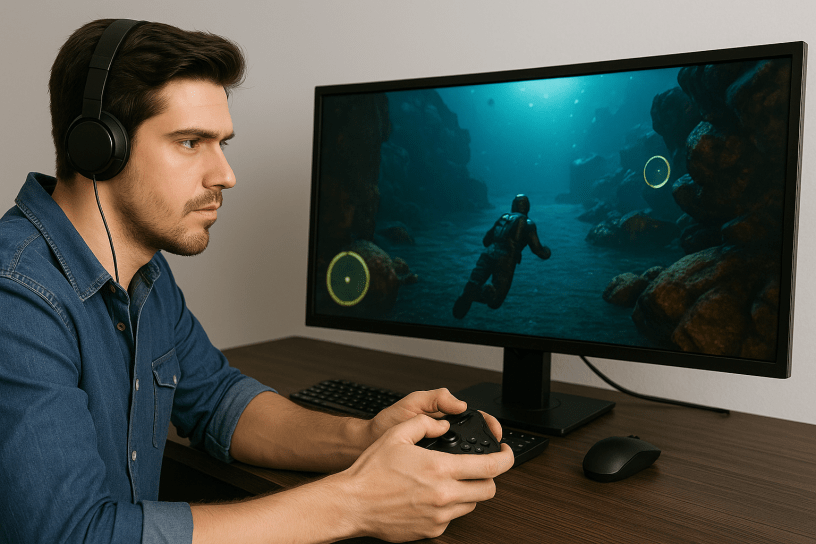
If you love video games and dream of turning that passion into a career, becoming a video game tester might seem like the perfect opportunity. While the job isn’t all fun and games, it offers a unique entry point into the gaming industry for those willing to put in the effort and learn the ropes. In this article, we’ll explore what a video game tester does, who this job is (and isn’t) suited for, how to drastically improve your chances of getting hired, and where to find legitimate game testing jobs.
I know most of you will want to learn where to find the jobs first but I often see people drawn in by what seems like a dream job. You play video games for a living and get paid so it should be perfect, right? Not really! This is not a career path for everyone.
What Is a Video Game Tester?
A video game tester, often referred to as a Quality Assurance (QA) tester, is responsible for playing video games in development to identify bugs, glitches, and usability issues before the game is released to the public. Testers follow test plans and scripts, log issues in detailed reports, and sometimes work closely with developers to help isolate and reproduce bugs.
Key Responsibilities Include:
- Following strict testing protocols.
- Identifying and documenting bugs or crashes.
- Providing feedback on user experience, game balance, and functionality.
- Repeating tasks multiple times to ensure consistency and stability.
- Using tracking systems like JIRA or Bugzilla to report issues.
Who Is This Job Best Suited For?
Becoming a game tester isn’t just about enjoying video games. In fact, it is a small part of the job. The best candidates are:
- Detail-oriented: You must notice even the smallest inconsistencies or bugs.You cannot
- Patient and persistent: Testing often involves repeating tasks dozens of times.
- Strong communicators: Clear, detailed bug reports are critical.
- Team players: Testers work with developers, designers, and other testers.
- Organized and tech-savvy: Especially for remote testers, strong computer literacy is essential.
Who This Job Is Not Suited For
While tempting for any avid gamer, not everyone is cut out for QA testing. You might want to reconsider if:
- You think the job is just about “playing games all day” for fun.
- You get bored easily doing repetitive tasks.
- You lack attention to detail or don’t enjoy technical documentation.
- You dislike collaboration or critical feedback.
- You’re not comfortable working under deadlines or pressure.
How to Drastically Increase Your Chances of Landing a Game Testing Job
If you’re serious about becoming a game tester, here’s how to stand out from the competition:
1. Learn the Basics of QA Testing
While you don’t need a computer science degree, understanding QA concepts, bug life cycles, and software testing fundamentals can give you an edge.
Free/Low-cost resources:
- “Foundations of Software Testing”
- ISTQB certification (for those seeking formal credentials)
2. Build Technical Skills
Familiarity with bug-tracking tools (e.g., JIRA, TestRail) and basic programming (e.g., scripting in Python or C#) is a plus.
3. Play a Variety of Games
Showcase your versatility by understanding different genres, platforms, and control schemes. Developers value testers who can give relevant feedback across different gameplay styles.
4. Document a Portfolio
Even if you’re not in a testing role yet, try writing mock bug reports, testing indie games, or participating in open betas and forums to practice your skills. Keep a record of these efforts in a simple online portfolio.
5. Get Experience through Beta Testing
While not paid, participating in closed or open betas can help build your resume, especially if you actively report issues and engage with the community.
Where To Find Video Game Tester Jobs
Now that you know what the role entails and how to improve your chances, here’s where you can actually find these jobs:
1. Major Game Studios’ Career Pages
Many companies hire testers directly or through contracted partners. Check the careers section of their websites regularly.
Examples:
Search for roles labeled “QA Tester,” “Game Tester,” “QA Analyst,” or “Playtester.”
2. QA Staffing Agencies and Game Outsourcing Firms
Many companies outsource QA to third-party firms. Some of these include:
- Keywords Studios: A global company frequently hiring testers.
- VMC (Volt): Hires for various game testing projects.
- Lionbridge Games: Offers localization and QA testing roles.
- Testronic: Another big name in QA and compatibility testing.
3. Freelancing and Gig Platforms
Though less consistent, freelance testing roles do exist. Look at:
- Upwork
- Freelancer
- Fiverr
- PlaytestCloud – Often used for mobile and early-stage game feedback.
- BetaFamily – Community testing for mobile apps and games.
4. Remote Job Boards
Remote work is becoming more common in QA testing. Try these platforms:
- Remote OK
- We Work Remotely
- Indeed (search for “remote game tester”)
- LinkedIn (use job alerts for QA or game testing)
5. Gaming Communities and Forums
Developers often recruit testers from their own communities. Get involved in:
- Reddit (/r/GameDevClassifieds, /r/GameDev, /r/PlayMyGame)
- Discord servers for indie game devs
- Steam and itch.io forums
Being an active, helpful community member can lead to playtesting opportunities, which may evolve into contract work. As with every single career path, the truth is that networking counts a lot.
Final Thoughts
Game testing can be a rewarding entry point into the video game industry, especially for those who are detail-oriented, hardworking, and genuinely interested in quality assurance. While competition is stiff and the work isn’t always glamorous, a thoughtful approach and the right preparation can help you stand out.
Whether you’re aiming to land your first job or pivot into a full-time QA career, use the tips and resources above to move from player to professional. Game on and good luck!
Discover more from Adrian Cruce's Blog
Subscribe to get the latest posts sent to your email.
 Adrian Cruce's Blog